
Key takeaways
- Invisalign rubber bands (elastics) correct how your upper and lower teeth fit together, not just tooth alignment.
- You typically wear elastics almost all day, removing them only for brushing and flossing.
- Average Invisalign treatment ranges from 3 to 10 months, and consistent elastic wear keeps that timeline on track.
- Not every patient needs rubber bands; your treatment plan determines whether elastics are part of your care.
What Are Invisalign Rubber Bands? (Quick Answer)
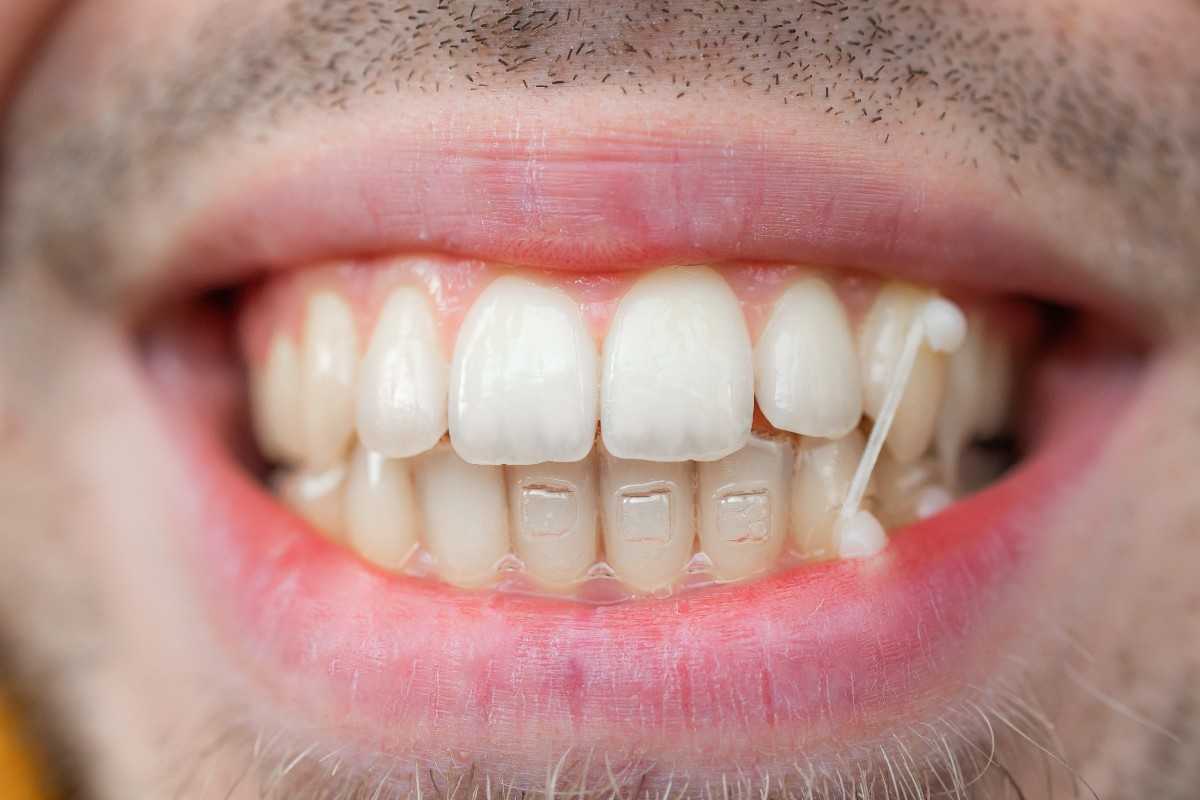
Invisalign rubber bands are small, stretchy elastics that connect your upper and lower aligners to guide your bite into a healthier position. They do the job that the clear trays alone cannot: shifting the way your top and bottom teeth meet.
The short definition
An elastic is a tiny loop of surgical-grade rubber. One end hooks onto a point near your upper teeth, and the other end connects near your lower teeth. As the band stretches, it creates a steady pull that nudges your jaw relationship in the direction your treatment plan calls for. You can read a helpful overview of the concept on Healthline.
Rubber bands vs. the aligner trays themselves
The aligners are clear, removable trays custom-made from a 3D scan of your mouth. They move individual teeth into alignment. Rubber bands, on the other hand, address the bigger-picture bite, meaning how the whole upper arch relates to the lower arch. Think of the trays as the fine-tuning and the elastics as the anchor that repositions your bite. Invisalign often uses both together to achieve the best results.
Why Your Bite Might Need Rubber Bands With Invisalign
Your bite may need rubber bands when the upper and lower teeth do not line up correctly, such as with an overbite, underbite, or crossbite. Aligners reposition teeth, but elastics are what move the jaw relationship into balance.
Correcting overbite, underbite, and crossbite
These bite problems are not about crooked teeth alone. They involve how far forward or back one arch sits compared to the other. Elastics apply the directional force needed to bring the arches into a comfortable, functional position, which can reduce uneven wear and jaw strain over time.
Why aligners alone cannot move the jaw relationship
Clear trays are excellent at rotating, tipping, and sliding individual teeth. What they cannot do on their own is generate the pull between the two arches that a bite correction requires. That directional force comes from the elastics working alongside the trays.
Signs your treatment plan may include elastics
- Your upper front teeth cover a large portion of the lower teeth when you bite down.
- Your lower teeth sit in front of your upper teeth.
- Some upper teeth close inside the lower teeth instead of outside.
- Your care plan mentions attachments or precision cuts on your aligners.
A note from Dr. Yaerin Lee
"When patients see rubber bands in their plan, I remind them that elastics are a sign we are correcting the foundation of the bite, not just straightening the smile. Consistency is everything. The bands only work while they are on."
How Invisalign Rubber Bands Work
Invisalign rubber bands work by connecting anchor points on your aligners to create a steady, gentle force that shifts your bite over time. The force is light but continuous, and that consistency is what moves the jaw relationship.
Attachments, buttons, and precision cuts
To give the elastics something to hold onto, we place small tooth-colored bumps called attachments, or we add tiny buttons and precision cuts to the aligners. These little features are barely noticeable, yet they create the hooks your bands need to do their job.
Class II vs. Class III elastic configurations
The direction of the pull depends on which bite issue we are correcting. A Class II setup helps when the lower jaw sits too far back, and a Class III setup helps when the lower jaw sits too far forward. We show you exactly where each band connects so you can place them correctly at home.
The force that shifts your bite
Elastics deliver a low, sustained force that your body responds to gradually. Research on clear aligner therapy shows that predictable tooth and bite movement depends heavily on consistent force application and wear time, as summarized in this systematic review and meta-analysis.
Place the elastic
Hook one end onto the upper anchor point and stretch it to the lower anchor point as shown by our team.
Wear consistently
Keep the bands on nearly all day, removing them only for brushing and flossing.
Replace as directed
Swap in fresh elastics each day to keep the force consistent and effective.
How Long Do You Wear Rubber Bands With Invisalign?
You generally wear rubber bands for close to 24 hours a day, removing them only to brush and floss. Most patients wear elastics for several weeks to a few months, depending on the extent of bite correction needed.
Daily wear time expectations
Elastics need to be worn almost full-time to work. Wearing them only part of the day slows progress and can extend your overall treatment time. The rule is simple: bands stay on except during oral hygiene, and you replace them regularly to keep the force fresh.
How many weeks or months bite correction takes
Because average Invisalign treatment runs about 3 to 10 months, the elastic phase usually fits within that window. Many patients notice their bite feeling more balanced within a few weeks of consistent wear, and full correction follows over the following months.
What happens if you skip them
Skipping elastics is the most common reason bite correction stalls. When the bands are off, the corrective force stops, and the bite can even drift back toward its starting point. Inconsistent wear often means adding weeks to your plan.
Consistency is the whole game
Rubber bands only apply force when you are wearing them. A day of skipped elastics can undo progress from several days of good wear, so building the habit early pays off.
Can Invisalign Fix Your Bite Without Rubber Bands?
Yes, Invisalign can sometimes correct a bite without rubber bands, but only when the bite discrepancy is mild. For moderate to significant overbites, underbites, or crossbites, elastics are usually needed to move the jaw relationship.
When elastics are not needed
If your teeth are mostly aligned and your bite is only slightly off, the trays alone may be enough. Minor spacing and crowding often respond well to aligners without the need for elastics. Your individual plan will make this clear from the start.
Use these
- Fresh elastics changed daily as directed
- Your aligners worn almost all day
- A soft toothbrush and floss for cleaning
- Your provider's map of which anchor points to connect
Avoid these
- Doubling up bands to speed things up
- Skipping elastics for long stretches
- Reusing stretched-out or torn bands
- Guessing at placement without guidance
Tips for Wearing Invisalign Elastics Comfortably
The most comfortable way to wear Invisalign elastics is to place them consistently, keep everything clean, and give your mouth a few days to adjust. Mild soreness early on is normal and fades quickly.
Managing soreness the first few days
When you first add elastics, your teeth and jaw may feel tender. This is a sign the bands are working. Sticking to softer foods for a day or two and staying consistent with wear usually settles the soreness within a few days.
Keeping bands and aligners clean
Because you keep your aligners in nearly all the time, hygiene matters. You remove the trays and elastics to brush and floss, which lowers your risk of cavities, gum disease, and bone loss. Clean your aligners gently, then place fresh bands afterward. This is one of the real advantages of a removable system over fixed alternatives.
Common mistakes to avoid
- Forgetting to put bands back in after brushing and flossing.
- Letting a torn or worn elastic stay in place instead of replacing it.
- Placing bands on the wrong anchor points.
- Storing aligners without cleaning them first.
Invisalign Bite Correction in Dedham, MA
At our Dedham, MA practice, we plan every set of elastics around your specific bite so the force works with your treatment goals. Invisalign is suitable for almost everyone, and no surgical procedures are needed for the vast majority of cases.
How our team plans your elastics
Dr. Yaerin Lee is a Diamond Invisalign Provider with extensive experience and is affiliated with the American Dental Association and the Academy of General Dentistry. She uses a 3D scan to design your custom aligners and maps out exactly where and when elastics come into play. That detailed planning is what keeps most cases within the typical 3 to 10 month range, with patients often seeing changes within that same window.
When to schedule a consultation
If you are wondering whether your bite needs correction, or whether elastics would be part of your plan, a consultation is the best next step. We will scan your teeth, walk you through your options, and give you a clear picture of your timeline. You can schedule your visit online or call us at 781-326-6260.
Have questions about your care? Book a consult with our team in Dedham.
Dr. Yaerin Lee, a Diamond Invisalign Provider, earned her Bachelor of Arts in Biology from Case Western Reserve University and her Doctor of Dental Surgery (DDS) from NYU College of Dentistry. With a focus on cosmetic, reconstructive, and preventive dentistry, she is dedicated to providing advanced care through ongoing education and membership in leading organizations, including the ADA, AGD, and AACD. Passionate about community service, Dr. Lee has also participated in outreach programs bringing dental care to underserved children. She believes a smile is the most beautiful expression and is committed to helping patients achieve and maintain theirs with compassion and excellence.
Ready to take the next step?
Schedule a consultation with Dental Park in Dedham.
Book online or call +1 781-326-6260
Frequently Asked Questions
Q: Why would you need rubber bands with Invisalign?
You need rubber bands when your bite needs correcting, such as an overbite, underbite, or crossbite. The clear trays move individual teeth, while elastics apply directional force to shift the relationship between your upper and lower jaws.
Q: Can Invisalign fix your bite without rubber bands?
For mild bite issues, Invisalign may correct your bite with the trays alone. For moderate to significant overbites, underbites, or crossbites, elastics are usually needed to move the jaw relationship into balance. Your custom plan will confirm which applies to you.
Q: How long do rubber bands take to fix your bite?
Bite correction with elastics usually takes several weeks to a few months. Because average Invisalign treatment runs about 3 to 10 months, the elastic phase fits within that window, and consistent daily wear keeps you on schedule.
Q: How long do I need to wear rubber bands with Invisalign?
You wear rubber bands close to 24 hours a day, removing them only to brush and floss. Wearing them almost all the time keeps the corrective force steady, which is essential for the bite to move as planned.
For directions, use this helpful Google Maps link or get step-by-step navigation via Get Directions .
Remember: Rubber bands only work while you wear them, so keep them on nearly all day and replace them as directed for the best bite correction.
Disclaimer:This article is for general information only and is not a substitute for a personalized evaluation by your dental provider.